IRE with Electro-Chemotherapy (IRECT)
A gentle treatment method for advanced cancer and complex recurrences
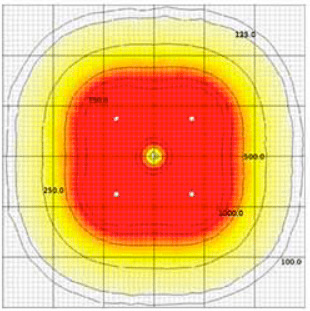
IRECT is a combination therapy that merges Irreversible Electroporation (IRE) with Electrochemotherapy (ECT). It is a newer focal treatment for advanced prostate cancer that was developed at Vitus Private Clinic and is available exclusively at our centre. The method extends the standard IRE treatment field, in which tumor cells are destroyed immediately, to include a surrounding zone where reversible electroporation (RE) occurs. This RE zone is then additionally treated with electrochemotherapy.
Chemotherapeutic drugs are typically administered over multiple treatment sessions when used on their own. In IRECT, however, a single low dose of a chemotherapeutic agent is sufficient because reversible electroporation temporarily increases cancer cell permeability, allowing the drug to enter the cells much more effectively.
In the RE zone, the effect of the chemotherapy is greatly enhanced. Electroporation temporarily increases the permeability of cancer cell membranes, allowing the drug to enter the cells more efficiently (Figure 2). Without the chemotherapeutic agent, reversible electroporation alone would not be sufficient to kill the tumor cells.
IRECT has also been used successfully in the treatment of skin and bone tumors. It is considered one of the gentlest approaches for cancer treatment involving larger areas of tumorous tissue because it can reach cancer cells located farther from the IRE electrodes. When used for prostate cancer, nearby organs and structures such as the bladder sphincter and bowel remain protected from damage.
When IRECT May Be Considered
At present, it is not yet fully established which specific situations are most suitable for combining IRE with a chemotherapeutic agent. Research in this area is ongoing, but possible areas of application include:
- Patients with high-grade prostate carcinoma
- Patients with prostate cancer that has already invaded the rectum or bladder wall
- Patients with incipient affection of the sphincter muscle, which could lead to incontinence
- Patients with complex focal recurrences after surgery, HIFU (high-intensity focused ultrasound), or radiation treatment.
Call us now on +49 (0)177 23 82 863 or get in touch using the contact form
How IRECT Combination Therapy Is Performed
Each treatment is planned and carried out with great precision for every individual patient.
Once the IRE needles are positioned, a chemotherapeutic agent is administered. Within about eight minutes, the drug has spread throughout the body. The localized electrical pulses are then applied. This creates the IRE and RE zones. In the IRE area, all tumor cells are destroyed immediately. In the surrounding RE area, the tumor cells absorb a high concentration of bleomycin and gradually die over the course of several weeks.
After the procedure, patients stay overnight in our private clinic and can usually return home the following day. Most patients resume their normal daily activities after only a few days.
IRECT was developed at Vitus as an extension of our experience with NanoKnife therapy. It allows us to treat advanced prostate cancer or difficult-to-reach tumor areas and to manage complex recurrences in a gentle and precise way.
Because every patient and every prostate cancer case is different, we encourage you to contact us to discuss which treatment approach is most appropriate for you. Our medical specialists will explain all available options.
Learn more about IRE and ECT for prostate cancer recurrences →
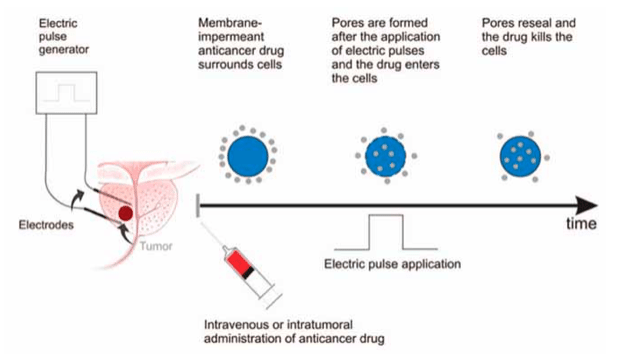
Right: Time course of ECT treatment. Figure based on a chart by Haberl et al.
IRECT Within Minimally Invasive Focal Therapy at Vitus
IRECT is a combination of two minimally invasive focal therapies and was developed and first implemented at Vitus Private Clinic. It is used when a tumor is large, irregular, or located close to critical structures, which can make complete treatment with IRE alone more difficult.
Although IRECT is an important option for selected advanced or recurrent prostate cancer cases, combination therapy is not required for every patient. Our team determines the most suitable approach on a case-by-case basis using MRI findings, tumor characteristics, and individual treatment goals.
View All Prostate Cancer Treatments →
IRE (Irreversible Electroporation)
IRE is the foundation of many minimally invasive treatments at Vitus. It destroys tumor cells using short electrical pulses that permanently open the cell membrane, leading to natural cell death while leaving surrounding nerves, vessels, and connective tissue largely intact. Because it is non-thermal, IRE can be used safely near critical structures that would not tolerate heat or radiation therapy.
For many patients, IRE alone provides complete focal control of the tumor, especially when the cancer is well defined and accessible. It is also one of the most function-preserving options available, which is why it remains the core technique in our focal therapy program and forms the basis of the IRECT procedure.
Learn More About Our NanoKnife IRE Treatment →
Electrochemotherapy (ECT)
ECT uses reversible electroporation to temporarily open cancer cell membranes, allowing a low dose of bleomycin to enter the cells more efficiently. This significantly increases the drug’s local effect while keeping systemic exposure low. Vitus was the first clinic to adapt ECT for prostate cancer, building on experience from its use in dermatology and soft-tissue oncology.
In the context of IRECT, ECT plays a key role in treating areas that extend beyond the immediate IRE ablation field. By enhancing the uptake of the chemotherapeutic agent in the reversible electroporation zone, ECT allows surrounding tumor cells to be eliminated gradually over several weeks while still preserving nearby structures.
Learn more about Electrochemotherapy (ECT) →
Immunotherapy (Immune Support Therapies)
While not required, immune-support therapies are routinely suggested alongside focal treatments at Vitus. When IRE destroys tumor tissue, released tumor antigens can help prime the immune system. Immune-support therapies aim to strengthen this response and support immune recognition of prostate cancer cells beyond the immediate treatment area.
These approaches do not replace focal therapy but are used in combination with IRE or IRECT as part of Vitus’ treatment strategy, particularly where microscopic disease may exist outside the primary treatment zone.
Frequently Asked Questions
IRECT is designed to treat large, irregular tumors or tumors located near critical structures while preserving urinary and sexual function. Effectiveness depends on MRI findings, tumor characteristics, and whether the cancer has recurred after previous treatments.
IRE destroys tumor cells within a defined ablation field using electrical pulses. IRECT expands this treatment by adding a surrounding zone of reversible electroporation combined with a low-dose chemotherapeutic agent, allowing larger or more complex tumor areas to be treated while preserving nearby structures.
IRECT may be considered when a tumor is large, irregularly shaped, located close to critical structures, or not fully accessible with IRE alone. It may also be an option for certain patients with recurrent disease after surgery, HIFU, or radiotherapy.
IRECT is used for selected cases of locally advanced or recurrent prostate cancer, particularly when tumors extend toward the rectum, bladder wall, or sphincter. Because it combines two non-thermal focal therapies, it allows precise treatment in anatomically sensitive areas.
Patients stay overnight in the clinic and return to normal daily activities within a few days. The chemotherapy used acts locally within the reversible electroporation zone, and the full treatment effect develops gradually over several weeks.
IRECT is a non-thermal, targeted treatment with a low risk of damage to nearby structures such as the bladder, rectum, or sphincter. Some patients may experience temporary local effects such as urinary irritation or swelling. Because only a very low chemotherapy dose is used and acts locally, systemic side effects are uncommon.